
Exercise during menopause: what helps, what to avoid, and where to start

A practical guide to exercise during perimenopause and menopause from Helen Morton, nutritional therapist with an MSc in sport and exercise psychology.
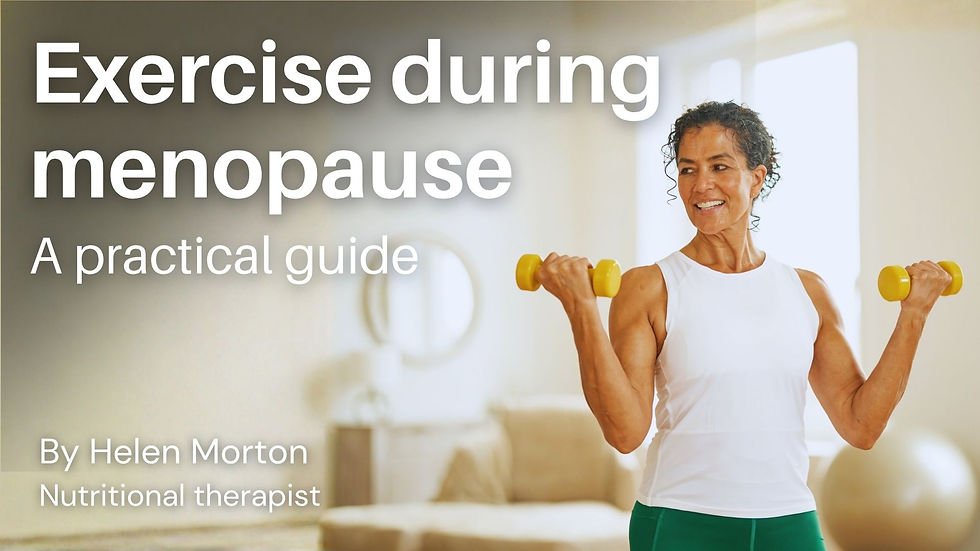
There is a lot of confusing advice about exercise during menopause: lift heavier, run less, never do HIIT, only do HIIT. The truth is that a few well-chosen changes to how you move, fuel and recover can make a real difference to how you feel. This is a practical introduction to what helps, what to avoid, and how to start.
In this article, we’ll explore:
Why does exercise during menopause matter?
Menopause is officially defined as when 12 months have passed since your last period, while perimenopause is the transition phase leading up to this. The perimenopause years change how your body responds to exercise, whether you’ve been a consistent exerciser throughout your life or are just starting to appreciate the joy of exercise.
Research on exercise in perimenopausal and postmenopausal women has progressed greatly over the last few years, but there is still a lot more to find out. Historically, much exercise-based research was done on men, which we now know does not necessarily translate to what a woman needs.
What is clear is that movement is one of the most powerful tools you have during midlife for tackling a whole range of perimenopause symptoms. The trick though is choosing the right kind of exercise at the right intensity, while getting sufficient support from sleep, food and stress management to let exercise work.
What changes when you exercise during perimenopause, and why?
Fluctuating hormones are a key reason for women going through perimenopause. Oestrogen in particular is known to play a part in things like muscle maintenance, joint and tendon health, bone density, temperature regulation, sleep quality, and mood. So when oestrogen levels are constantly up and down, training can feel very different depending on the day.
Many women notice some of the following changes:
Slower recovery between hard exercise sessions
Gradual loss of muscle mass and strength if it isn’t actively maintained
Disrupted sleep, night sweats, low mood or increased anxiety, which reduce energy and motivation to exercise
Pelvic floor changes, like bladder leakage when running or jumping
A greater stress response, sometimes called a cortisol response, to intense exercise that takes longer to settle, particularly when you exercise under-fuelled
This doesn’t mean that exercise has stopped working completely, but rather it means that the plan needs to change. Remember though, that, exactly like puberty, every woman’s experience of menopause is different. If you’re struggling, then it could be worth talking to your GP or a menopause specialist.
What is the best exercise for menopause?
The following six things have been researched and can fit into your weekly plan with ease.
Move a little bit more, every day
This is one of the basics of exercising through the menopause—movement every day. This could look like a brisk walk to the shops and back (extra points if you’re carrying heavy bags), tackling some housework with a degree of energy and enthusiasm, or gardening, which includes lifting, pushing and pulling.

Strength training
In recent years, there has been more positive research on the benefits of strength training in women over the age of 40. If you only change one thing about your exercise during menopause, make it a twice-weekly strength session.
Strong muscles protect your joints and make everyday movements, like walking up and down stairs, getting out of a low chair, and moving boxes or furniture around, easier. Although cardiovascular exercises like running, swimming and cycling are brilliant for your heart and head, on their own, they aren’t enough to protect or build your muscle and bone.
Two sessions of strength training a week are a great start. Aim to incorporate exercises built around squats, hip hinges, presses, pulls and carries, using weights that are heavy enough to make the last few reps feel hard. If you're brand new to strength training, then a few sessions with a qualified PT or strength coach to learn proper technique are invaluable.
Nutritional therapist tip: In addition, to support muscle maintenance, eat around 25g of protein with every meal.
HIIT vs Zone 2
Both HIIT (high intensity interval training) and Zone 2 (steady, chatty-pace running or cycling) are great types of exercise for women in midlife. But too much of one without the other can be less effective.
While Zone 2 aerobic exercise is excellent for maintaining your cardiovascular fitness and aerobic base, it doesn’t improve your fitness to a great degree quickly. HIIT on the other hand, where you do short sharp intervals of high intensity, is time efficient and improves fitness quickly. However, as oestrogen declines during menopause, your cortisol response to intense exercise can take longer to settle and many women notice that recovery takes significantly longer.
You can make both work by:
Keeping your longer exercise sessions easy, with no more than one hard training session a week to begin with.
Don’t do HIIT fasted. Always make sure that you have a small snack first, such as oatcakes with nut butter, or a banana and some Greek yoghurt.
Look at your total stress load, including life stress, not just one session.
Pelvic floor and a strong core
Bladder leakage when you cough, jump or run is more common than you might think in midlife, but it is not something that you have to put up with. Lower levels of oestrogen can affect pelvic floor tissues, which years of running, childbirth or very heavy lifting can add to. Having a strong pelvic floor and deep core muscles supports everything from jumping and running to carrying heavy shopping bags.
A pelvic health physiotherapist can check you’re doing pelvic floor exercises correctly, then help you build core work, such as dead bugs and side planks, into your daily routine. If you have leakage or a feeling of heaviness, then consider asking your GP for a referral.
Find your people
Many women go through perimenopause quietly and feeling like they are alone. Moving with other women, whether at a local Parkrun, a strength class or in a walking group, gives you accountability, laughter and someone to chat to who gets what you’re going through.

Get outside
It is well known now that exercising outdoors can improve mood, ease stress and help with a good night’s sleep, all of which are common wobbles during menopause. Morning daylight helps regulate your body clock, and spending time in green space gives your nervous system a break from screens and to-do lists. A 20-minute walk at lunchtime does the job.
What should you avoid when exercising during menopause?
Most of the mistakes women make with exercise during menopause come from good intentions. These are three common ones:
Being sedentary
Even if you exercise regularly, long stretches of sitting can undo some of the good work. Try to break up desk time with short walks, stretch breaks or a few squats, and aim to move your body a little every hour. Your exercise sessions are important, but so is what you do with your body for the rest of the day.
Overloading too quickly
A sudden jump in volume or intensity of exercise is not sustainable, nor is it enjoyable. Joints and tendons can be less forgiving in midlife, and recovery takes longer, so it is best practice to build up exercise gradually. Change one thing at a time, this could be a longer session or heavier weights but not both, and include easier weeks. If your body is feeling tired and sore, then it is absolutely OK to take a day off from your exercise plan or go for a gentle walk instead.
Ignoring sleep, nutrition and stress
Your muscles grow and adapt after the exercise session has finished during the recovery time. Chronically poor sleep, under-eating, and a stressful life don’t allow your body to recover enough after a hard exercise session.
Sleep: prioritise sleep as you would a training session. Night sweats and 3am wakefulness are common in menopause, so if sleep is consistently poor, ease back on your exercise intensity, particularly in the evening, and speak to your GP.
Nutrition: it is very important to fuel your training, especially before higher-intensity sessions. That means making sure you’ve eaten a snack or meal in the hours before exercising. For recovery, include some protein at each meal and drink water to rehydrate regularly throughout the day.
Stress: aim to build in some relaxation and downtime, no matter how short, every day. Walks, yoga or pilates, and time away from screens are all helpful in reducing stress and helping your body to relax.
Stress is the one most of us underestimate. If you want to understand what stress does to your body, and why it affects how you recover from exercise, our stress guide explains it.
Where to start
Move a little every day: a brisk walk, housework done with some energy, or gardening all count.
Add two strength sessions a week: built around squats, hip hinges, presses, pulls, and carries. If you are new to it, book a few sessions with a qualified coach first.
Keep most of your cardio at an easy, chatty pace: no more than one hard session a week to begin with, and have a small snack before anything intense.
Don't put up with bladder leakage or a feeling of heaviness: ask your GP about a referral to a pelvic health physiotherapist.
Get outside once a day: even if it is only a 20-minute walk at lunchtime.
Find people to move with: whether that is a walking group, a class, or parkrun.
Change one thing at a time: build in easier weeks, and treat sleep, fuel, and downtime as part of the plan.
Final thoughts
Menopause doesn’t need to be the end of doing strong, enjoyable training. For some women, it is just the beginning of their exercise journey. Menopause does, however, require a change of approach: you want to be lifting weights properly, keeping some of your cardio sessions easy, protecting your sleep, fuelling your sessions and moving with people who motivate you.
As with any exercise plan at any age, start small and build gradually. We recommend talking to your GP or a menopause specialist if menopause symptoms are particularly bothersome.
For more on fuelling training through midlife, you may find my book, Eat Well, Run Strong: essential nutrition for female runners, useful reading.
Please note that this article is for general information and isn’t medical advice. If you have health concerns or symptoms, speak to your GP and healthcare practitioner before changing your exercise routine.
Enjoyed this? Sign up for The Health Puzzle monthly newsletter for practical, evidence-based nutrition and wellbeing guidance, plus exclusive discount codes from the brands we trust.
Affiliate disclosure: Some of the links in this article are affiliate links, which means The Health Puzzle may earn a small commission if you make a purchase, at no extra cost to you. We only recommend products we genuinely believe in, and our editorial choices are never influenced by commission. For more information, please see our Affiliate Policy.


Comments