
Vagus nerve and bloating: why it may not be about what you ate

Cutting out food after food and still bloated? Why a rushed, distracted lunch might be your trigger, by nutritional therapist Paula Jones.
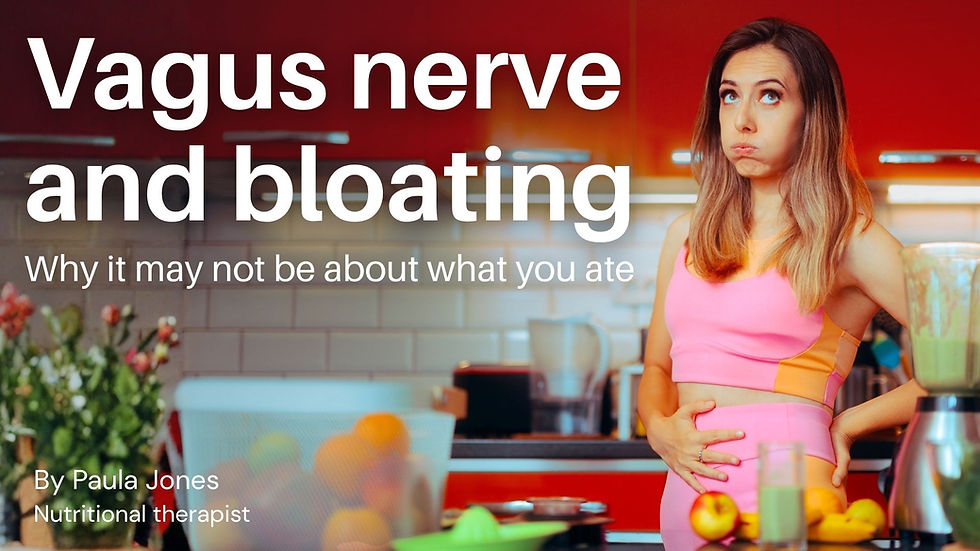
If you have been trying to fix your bloating through diet alone, the link between your vagus nerve and bloating may be the part of the puzzle you have not looked at yet.
Picture this: you’ve had a wonderfully virtuous morning. You grabbed a gorgeous, vibrant lunch, maybe a colourful salad packed with crisp greens, wholesome grains, and a generous slice of avocado. You feel great, proud of yourself for nourishing your body.
Then, 3pm rolls around.
Suddenly, your favourite trousers feel three sizes too tight. You glance in the mirror, and you look six months pregnant. The discomfort creeps in, along with that all-too-familiar wave of frustration. “Is it the kale?” you wonder. “Was it the quinoa? Am I suddenly intolerant to raw salads? Who on earth is intolerant to salad!?”
If this sounds familiar, you aren’t alone. So many people fall into the trap of the shrinking plate. They start cutting out foods one by one (gluten, dairy, salad, and grains) until their diet feels like a minefield of anxiety, and the bloating still hasn’t gone away.
But what if the food isn’t actually the enemy? What if your gut isn’t failing you, but your nervous system is?
In this article, we’ll explore:
What happens to digestion when you are stressed?
To understand why your mid-afternoon lunch is rebelling against you, we have to look at the two modes your nervous system operates in: the sympathetic (“fight-or-flight”) and the parasympathetic (“rest-and-digest”).
In an ideal world, you sit down to eat in a state of calm. Your parasympathetic nervous system turns on, signalling to your body that it’s safe to eat. Stomach acid (hydrochloric acid) flows, digestive enzymes are released, blood rushes to the gastrointestinal tract, and smooth muscles orchestrate smooth motility.
Now, let’s look at what actually happens on a typical Tuesday: you’re typing out a last-minute email while frantically chewing a wrap, scrolling through a stressful news feed on your phone, or rushing between back-to-back Zoom calls.
Even if you’re eating the most nourishing food on earth, your brain thinks you’re running from a threat. In fight-or-flight mode, your body prioritises survival over digestion. It diverts blood flow away from your gut, dials down stomach acid production, and hits the brakes on digestive enzymes.
The result? Undigested food moves sluggishly through your system, sitting like a brick in your upper GI tract where resident gut bacteria happily ferment it. That fermentation creates excess gas, pressure, and yes, that uncomfortable 3pm bloat. And if bacteria have built up in your small intestine, as they do in SIBO, the bloating and discomfort can feel even more intense.
Vagus nerve and bloating: how your brain and gut talk to each other
At the heart of this mind-gut conversation is the vagus nerve. Think of it as the ultimate two-way highway, running from your brainstem down through your neck, chest, and right into your gut.
It works both ways:
Brain to gut: when you’re stressed, anxious, or overwhelmed, your brain sends distress signals down the vagus nerve, telling your gut to shut down digestion.
Gut to brain: if your gut is inflamed or struggling to digest, it sends distress signals up to your brain, which is why gut issues so often go hand in hand with brain fog, anxiety, and fatigue.
This means you can take every high-end digestive enzyme and gut supplement on the market, but if your vagus nerve is trapped in a constant stress loop, your body simply won’t have the physiological green light to heal or digest properly.
How can you switch on rest and digest before a meal?
You don’t need to overhaul your entire life to start supporting your nervous system. Here are three simple, low-friction shifts you can try right before your very next meal:
The 60-second transition
Don’t leap straight from a high-stakes meeting or a chaotic email inbox directly into eating. Give your body a minute to bridge the gap. Step away from your desk, drop your shoulders away from your ears, and take a few deliberate breaths. Signal to your body: work is paused; it is time to nourish.
Prime your vagus nerve
Before you take your first bite, you can physically stimulate your vagus nerve to switch on your parasympathetic state. Try taking a slow, deep belly breath in through your nose, followed by a long, slow exhalation (making your exhale twice as long as your inhale: for example, inhale for 4 seconds and exhale for 8). Repeat this three times. Even a gentle, quiet hum or gargling water can stimulate the vagus nerve and tell your gut it’s safe.
Ditch the screen-feeding
When you eat while staring at a laptop, scrolling through social media, or watching intense TV shows, your brain remains visually and mentally stimulated. Try turning off screens and removing distractions during at least one meal a day. Notice the taste, the texture, and the smell of your food. Eating mindfully isn’t just a wellness buzzword; it’s a biological trigger for better digestion.
A gentle reminder
Healing your gut isn’t always about restriction; sometimes, it’s about relaxation. Your body doesn’t just need better ingredients on your plate; it needs to feel safe enough to process them.
So the next time 3pm rolls around and your belly starts puffing up, take a deep breath. Before you blame the salad, check in with your nervous system. How were you feeling when you ate your last meal?
Work with Paula
Paula Jones is a nutritional therapist specialising in gut health and women's health. She holds a Diploma in Nutritional Therapy from BCNH (the British College of Nutrition and Health), and is registered with BANT and the CNHC. With over 16 years of professional experience, she supports individuals with digestive complaints, gut conditions such as IBS and SIBO, and women's hormonal health.
Paula works through a functional medicine lens, drawing on functional testing where appropriate to identify the root causes behind each person's symptoms and to build a tailored plan around their individual needs.
"If you'd like to find out more about working with me, visit my profile."

This post was originally published on paulajonesnutrition.com and republished with permission.


Comments